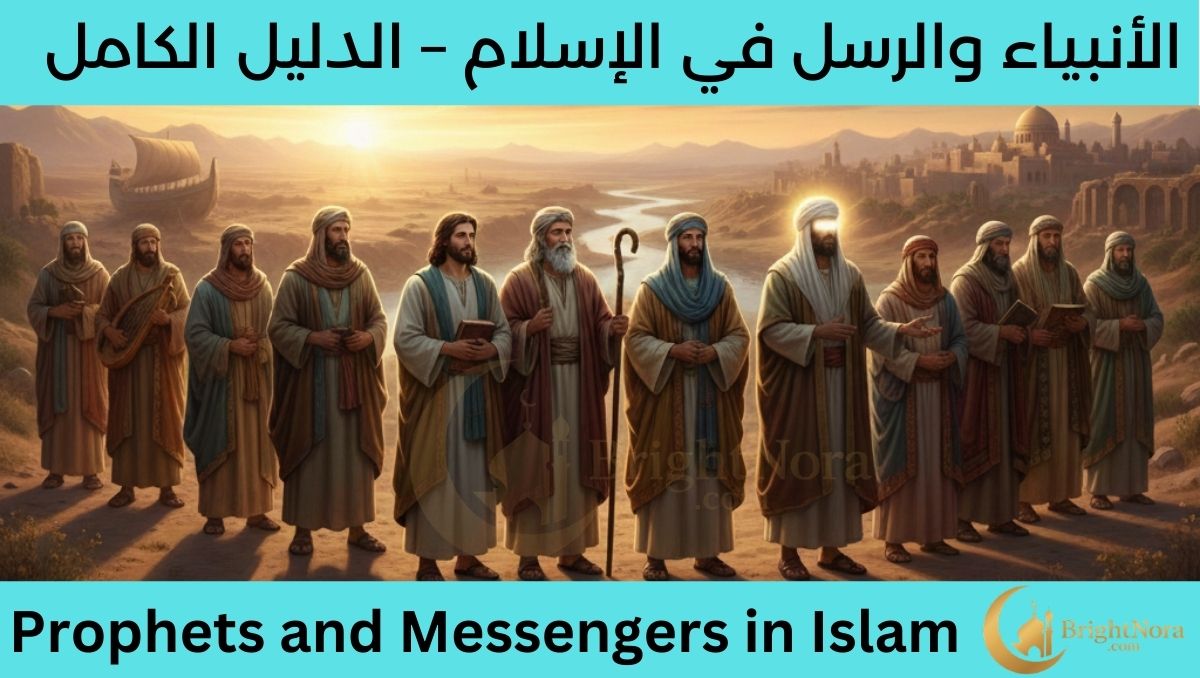
Prophets and Messengers in Islam: In Islam, the concept of prophethood stems from the belief that, like any caring entity, Allah provides guidance for humanity. Just like any manufacturer provides an instruction manual for a machine, Allah provides His creation with some form of divine guidance and for His people, that is through His prophets.
Unlike in today’s modern society, the majority of human beings, no matter how intelligent, simply could not come to terms with the extreme details of worship that would be deemed as pleasing to their Creator. Hence, divine guidance through prophets is vital. Now, we will discuss in detail the Prophets and Messengers in Islam.
Visit Now:https://thewiseera.com/
The Difference between Prophets and Messengers in Islam
In most areas of the world, the terms ‘prophet’ and ‘messenger’ have been deemed interchangeable. However, within Islamic scholarship, a firm difference is made between the words Nabi, which translates to prophet and a more formal term Rasull, which stands to be known as messenger. A nabi is someone who receives a form of revelation from Allah to look after himself as well as his people.
However, most of the time, nabis continue the work of former messenger prophets without bringing in a completely new law. A Rasull, in contrast, would be a prophet who has been given the gift of a new Shariah law and is thus sent to a new form of people who might have deviated from ancient guidance.
The Role of Prophets in Islamic Beliefs
Conveying the Message of Allah
The main responsibility of every prophet is to deliver Allah’s message to the people just as it was given to them, without any changes, additions, or deletions. This requires great fervour, and the Quran highlights the prophet’s undertaking: “The Messenger only must convey the message” (Quran 5:99). They are, so to speak, the spiritual postmen of truth. They deliver what was given to them and do not tamper with it in any way.
Setting Moral Examples for Humanity
It is often said that “actions speak louder than words,” and that is without a doubt applicable to the case of prophets. Every one of them was and is a role model in their respective areas of virtue. They were embodiments of kindness, steadfastness, love and righteousness. They were Allah’s obedient servants. Seeing them demonstrated for people as to how one should conduct oneself with the guidance of Allah.
Also Read: 64 Sahaba Names – Companions of Prophet ﷺ
The Difference Between Prophets and Messengers in Islam
Their tasks
As it was previously mentioned, every Rasul is a Nabi, but not every Nabi is a Rasul. A Rasul is sent to a specific people and a community that has either not had the chance to receive divine law, or has received it but does not believe in it, and he has to introduce a new Shariah from Allah. Oppositely, a Nabi is bound to respect and adhere to the Shariah of the previous Rasul, thus he follows and builds upon it.
Their Responsibilities
All prophets aim to guide and warn their people, but a Rasul also has to deliver new laws and, at times, challenge deeply corrupt and disbelieving civilisations. This often leads to direct persecution from their society. A Nabi is more focused on maintaining and teaching a given divine law and is more of a spiritual renewer and moral corrector instead of a legal codifier.
The Prophets’ Number in Islam
Known and Unknown Prophets
It is a part of Islam to believe that Allah sent a prophet to every nation at every period. The Quran mentions 25 prophets, among them are Adam, Nuh, Ibrahim, Musa, Isa, and Muhammad (Allah’s peace be upon them). However, those were not and are not the only prophets that existed, as there are many unnamed prophets.
The Hadith Mentioning Their Count
Reported by Abu Dharr, a hadith claims the total population of prophets were 124,000, among which were 315 messengers. Regardless of the debate amongst scholars over the authenticity of the narrators, the core doctrine is the same. Allah’s guidance has reached every stage and corner in the timeline of human civilisation and geography. No nation can boast that it was devoid of divine guidance.
Understanding Prophethood in Islam
Clarifying the Truth
The reasoning of humanity, however sophisticated, is often biased and clouded by culture or false information. Prophets were designated to clear these confusions so people are not misled by incorrect beliefs about God, ethics, and the reason for existence.
Cultural Considerations
One more piece of wisdom in the life of multiple prophets is that human societies differ in language, culture, and historical challenges. One message might be appropriate to one group, and completely inapplicable to another. That is why Allah sent prophets to every nation, and every prophet spoke in the language of the people and in answer to their concerns. This diversity in prophethood ensures that the guidance of Prophets and Messengers in Islam is universally relevant.
Preservation of the Final Message
Earlier revelations were frequently corrupted or lost because they were entrusted completely to humans to preserve. On the other side, the Quran has a divine promise of preservation: “Indeed, it is We who sent down the Quran, and indeed, We will be its guardian” (Quran 15:9).
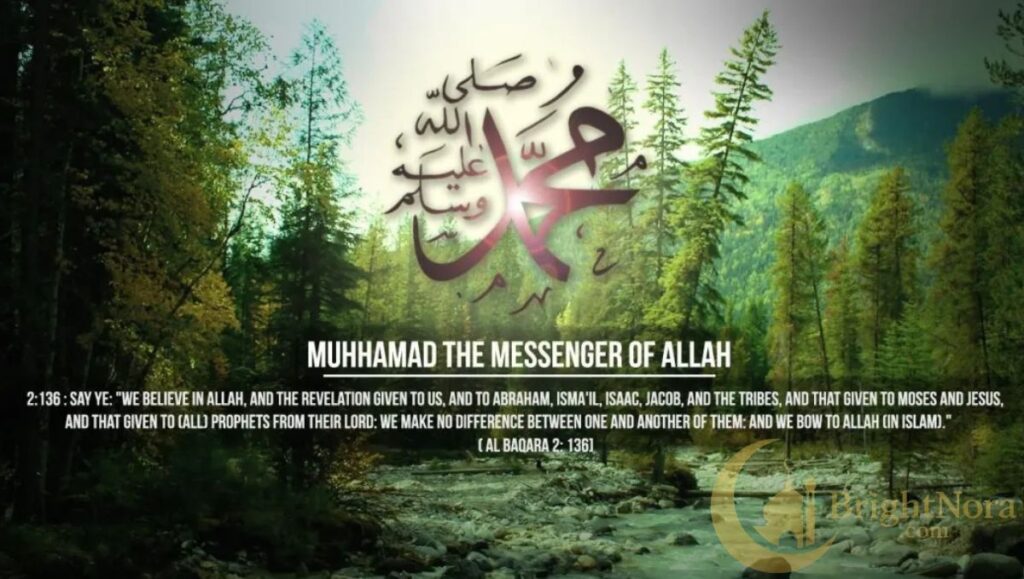
The legacy of Prophets and Messengers in Islam reaches its completion with Prophet Muhammad (PBUH), the Seal of the Prophets. It is for this reason and to counter the fundamental teachings of the religion that any claims of new prophecies after Muhammad (PBUH) are false.
Also Read: Powerful Duas – Help, Hope & Blessings
Conclusion
Islam’s prophets shaped history as much as history shaped their lives. Their lives have been carved into tales of deep mercy while bestowing humanity with graceful benevolence, direction, and justice. Their journeys were filled with hardship, pain, and exile – and in some instances, they were even ridiculed and put to death. The lives of the Prophets and Messengers in Islam are an example of faith, sacrifice, and perseverance. Even today, people learn from their stories to strengthen their courage and determination for the truth. The legacy and stories of the prophets are the stories of all humanity, which provide important lessons for every era.
FAQ’s
What are Prophets and Messengers in Islam?
Prophets and Messengers in Islam are chosen by Allah to guide humanity, deliver divine messages, and teach faith and obedience to Allah.
How many prophets are mentioned in Islam?
Islam mentions 25 prophets by name in the Quran, while many more were sent to different nations.
Why are Prophets and Messengers in Islam important?
Prophets and Messengers in Islam are important because they guide people to worship Allah alone and live a moral, righteous life.
What is the difference between a Prophet and a Messenger?
A Messenger receives a new divine law or book, while a Prophet follows and teaches an existing revelation.
Who was the last of the Prophets and Messengers in Islam?
The last of the Prophets and Messengers in Islam is Prophet Muhammad ﷺ, the final Messenger sent for all mankind.