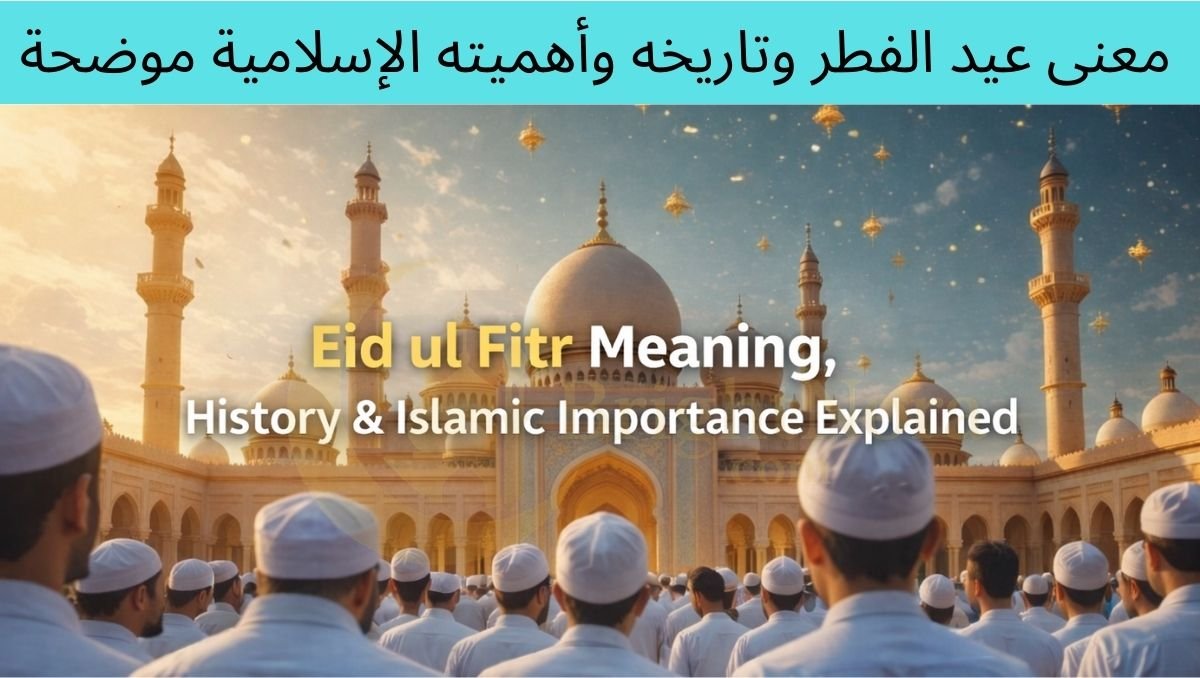
Eid ul Fitr Meaning: The Islamic calendar contains multiple times for deep spiritual meditation but the Eid ul Fitr festival brings people together to experience their most joyful and relieved moments. The day enables millions of global believers to end their fasts and practice thanksgiving. The true meaning of Eid ul Fitr together with its special status among Muslims constitutes the religious core of this holiday.
Beyond the new clothes and festive meals, Eid ul Fitr is a complex tapestry of history, theology, and community. It is a day that belongs to the soul as much as it belongs to the family dinner table. The guide provides detailed information about the Festival of Breaking the Fast by explaining its origins and its rituals and its vital significance to the people who celebrate it.
Visit Now:https://duaguidance.com/
Eid ul Fitr Meaning in Islam: Linguistic & Spiritual Roots
To understand the day properly one needs to begin with its language. The term Eid is derived from the Arabic root ‘awd which means to return or to repeat signifying a joy that returns annually. The word Fitr comes from the same root as Iftar (breaking the fast) and Fitrah (the natural human disposition).
The Linguistic Definition
The literal Eid ul Fitr meaning is the Festival of Breaking the Fast. The holy month of Ramadan concludes after 29 or 30 days of fasting which begins at dawn and ends at sunset. The first day of Shawwal marks the beginning of the Islamic lunar calendar’s tenth month which starts on this date.
The Spiritual Definition
The Islamic holiday of Eid ul Fitr which celebrates the end of Ramadan stands for an Islamic interpretation which says people return to their original state of purity. After a month of intense prayer, self-regulation, and charity, Muslims believe they have washed away previous sins and are returning to a state of spiritual cleanliness. It is a celebration of the strength Allah gave them to complete the commandment of fasting.
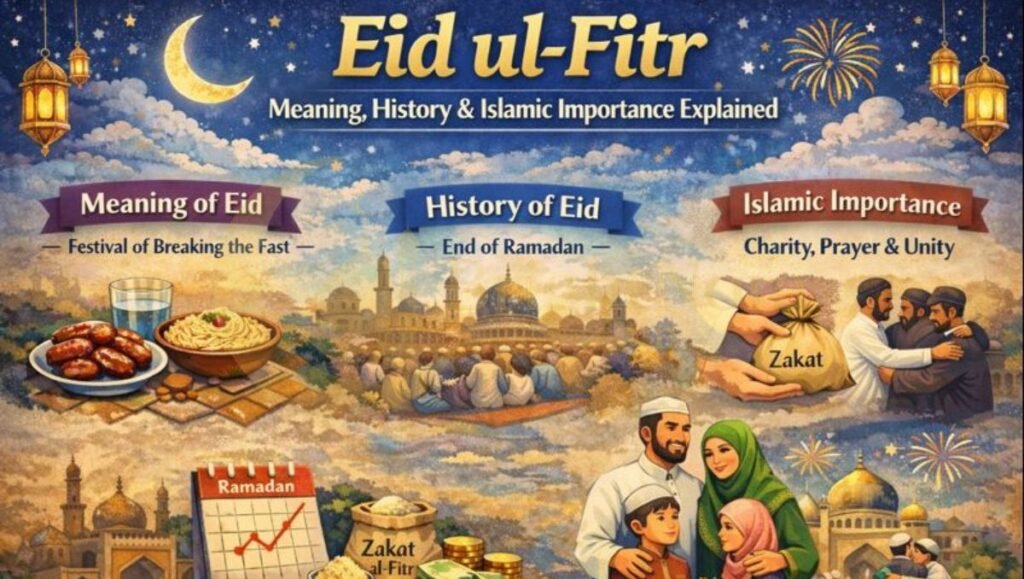
History of Eid ul Fitr: The Prophet Muhammad ﷺ Era
The history of Eid ul Fitr is as old as the Islamic community in Medina. Before the advent of Islam, the people of Medina celebrated two specific days with carnivals and festivities. When the Prophet Muhammad ﷺ migrated from Makkah to Medina (the Hijrah), he observed these celebrations and informed his companions that Allah had replaced those two days with something better: Eid ul Fitr and Eid al-Adha.
The first Eid was celebrated in 624 CE, following the Battle of Badr. The people celebrated two different events because they achieved victory in battle while they observed their first required fast during Ramadan. The Prophet Muhammad showed his followers that these days should be used to show appreciation to Allah while they help those who need assistance.
Why Eid ul Fitr Is Celebrated After Ramadan
The festival begins at a time which contains deep spiritual wisdom. The date of Eid is determined by the spiritual progress of the previous month.
- A Reward for Discipline: Ramadan is a month of spiritual training. Our bodies learn to endure hunger while our minds acquire the ability to dismiss undesirable thoughts. The Eid celebration serves as a graduation ceremony where believers show they have completed their spiritual training program.
- Manifesting Gratitude: The Quran states that we must complete our fast because it helps us “magnify Allah for His guidance and perhaps be grateful” (Surah Al-Baqarah).
- The Sighting of the Moon: The Eid celebration exists as a physical expression of that gratitude. The celebration starts when people see the new crescent moon. The believer uses this experience to connect with the natural cosmos which shows how their worship matches the universe created by Allah. The first step to understanding Eid ul Fitr requires people to study how nature exists together with religious belief.
Also Read: Eid al-Fitr Zakat, Fitrana & Charity Rules – Complete Islamic Guide
Islamic Importance & Spiritual Significance of Eid ul Fitr
People celebrate Eid as a cultural festival, yet its actual value exists as a spiritual celebration. The time between Ramadan worship and regular daily activities finds its connection through this practice.
A Day of Forgiveness
It is narrated in various Hadiths that on the morning of Eid, angels stand at the roadsides calling out to the Muslims to go forth to a Lord who is Most Generous. It is a day when Allah bestows His special forgiveness upon those who fasted with sincerity. In this context, the Eid ul Fitr meaning is synonymous with a fresh start.
Strengthening the Ummah (Community)
Islam emphasizes the Ummah, the global brotherhood and sisterhood. Eid ul Fitr forces this connection. Whether you are in Jakarta, London, or Makkah, you are performing the same prayer, eating similar sweets, and sharing the same joy. The Islamic social theology foundations depend on this one fundamental principle.
Key Sunnah & Religious Practices of Eid ul Fitr
Our observance stays an act of worship through following the Prophet Muhammad’s Sunnah traditions. The Muslim community must perform these vital Eid ul Fitr Meaning to show proper respect for the holiday.
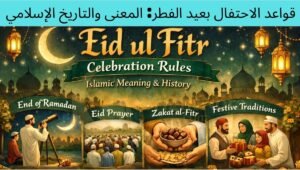
- The Ghusl (Ritual Bath) Muslims must perform a complete ritual bath to prepare for the Eid prayer.
- Wearing the Best Clothes: Muslims should dress in their most formal attire which must be both clean and respectable for public display.
- The Pre-Prayer Snack: Unlike Eid al-Adha, it is a Sunnah to eat something sweet (usually dates) before leaving for the Eid prayer. The fast has reached its conclusion, which people can see through this evidence.
- Zakat al-Fitr (The Mandatory Charity) stands as an essential requirement for religious practice.
- Every head of household must pay a specific amount of charity before the Eid prayer so that the poor can also enjoy the holiday.
- Salat al-Eid: This is a special prayer consisting of two units (Raka’ah) performed in a large congregation, followed by a sermon (Khutbah).
Difference Between Eid ul Fitr and Eid al Adha
It is common for those new to Islam to confuse the two Eids. While the Eid ul Fitr meaning is centered on the completion of fasting, Eid al-Adha is the “Festival of Sacrifice.”
- Eid ul Fitr: The holiday which occurs after Ramadan needs people to conduct charitable activities through Zakat al-Fitr while they break their fasting period.
- Eid al-Adha: The holiday occurs during Hajj season because people use animal sacrifice which they call Qurbani to show devotion to Prophet Ibrahim (AS).
Common Misconceptions About Eid ul Fitr
The holiday exists throughout the world yet people still believe in multiple misconceptions about it.
- The Eid ul Fitr celebration acts as a reward which people receive for their month-long fasting instead of a birthday festival although both customs include family time and gift giving.
- Muslims are required to buy new clothes according to the belief which states that people need to purchase new garments for special occasions.
- People need to maintain their personal cleanliness standards while they should wear appropriate clothing for their special religious functions.
- People believe that only those who observe fasting can participate in this event.
- The day serves as a community celebration which allows all members including children and people with health problems who were unable to fast to join. Allah shows compassion to all people without restriction.
Conclusion
The Eid ul Fitr celebration teaches people about maintaining equilibrium between two extreme points. The period after hardship needs to end before people can experience their moment of celebration. The purpose of this day is to fix broken ties between people while we give food to those who need it and pray together as a community.
The Eid ul Fitr Meaning helps us begin our journey toward God through the spiritual lessons we learned during Ramadan which taught us to be patient and give charity while staying aware of God throughout the entire year. Through each Eid celebration, I hope to draw nearer to my Creator while my home receives the sacred illumination which brings peace.
FAQ’s
What is the Eid ul Fitr Meaning in Islam?
Eid ul Fitr Meaning refers to the festival marking the end of Ramadan, celebrating gratitude, joy, and spiritual renewal.
When is Eid ul Fitr celebrated each year?
Eid ul Fitr is celebrated on the first day of Shawwal, immediately after the month of Ramadan, based on moon sighting.
How can I understand the Eid ul Fitr Meaning spiritually?
The Eid ul Fitr Meaning highlights forgiveness, generosity, and coming together with family and community in celebration.
What are common traditions observed on Eid ul Fitr?
People perform special prayers (Salat al-Eid), give charity (Zakat al-Fitr), enjoy festive meals, and exchange greetings.
Why is knowing the Eid ul Fitr Meaning important for Muslims?
Understanding Eid ul Fitr Meaning helps Muslims appreciate its spiritual significance, follow traditions, and celebrate with purpose.