

The month of Ramadan serves as a period which enables people to achieve spiritual renewal while practicing self-discipline and developing a deeper relationship with God. For millions around the globe, this period serves as a break from their hectic everyday schedules which enables them to concentrate on their inner selves. The holy month requires people to observe fasting rules which go beyond the basic requirement of not eating or drinking.
Your fasting practice reaches its spiritual peak through your Ramadan Fasting Intention and Iftar Dua. These short yet powerful supplications transform a physical act of hunger into a sacred act of worship. You will discover that understanding these words enables you to turn your fasting practice into a life-changing experience.
Visit Now:https://duaguidance.com/
What is Ramadan Fasting Intention (Niyyah)?
The Niyyah or intention functions as the essential element that powers every action in Islamic tradition. It represents the inner vow which people make silently or aloud to God when they decide to perform particular acts of worship. An action remains a basic physical activity until the person executing it shows dedication through his or her intentions. People need their intentions to perform worship because it establishes the correct way to approach their religious practices.
The practice allows you to achieve a spiritual and mental restoration which helps you center your thoughts on your connection with the Divine. Your heart needs to establish its strongest commitment but your Ramadan Fasting Intention and Iftar Dua need to be spoken because they will help your brain prepare for the day of fasting.
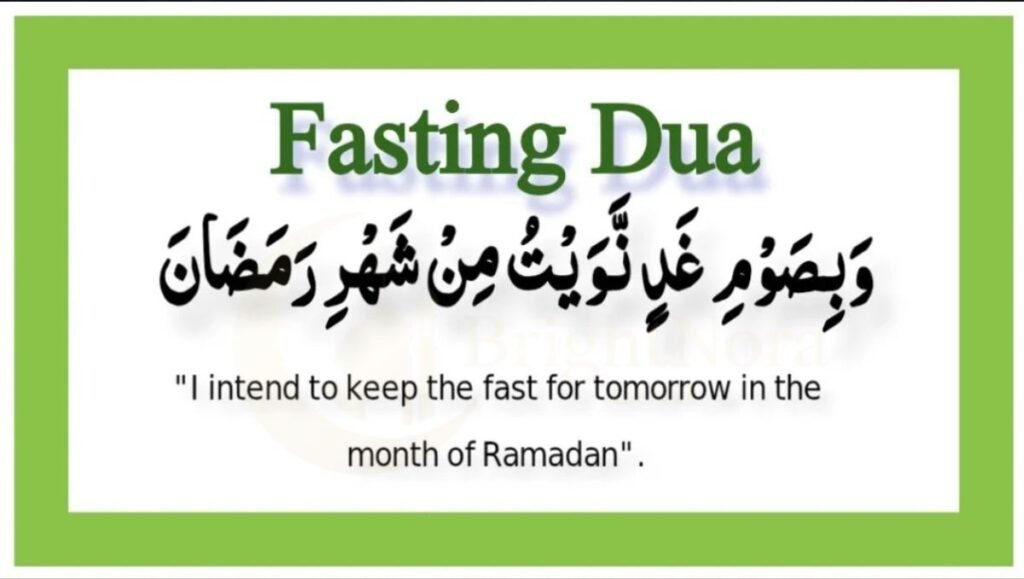
Ramadan Fasting Intention in Arabic
While the intention is primarily a matter of the heart, many Muslims find comfort and clarity in reciting the traditional words. It serves as a beautiful ritual to start the day before the break of dawn (Suhoor).
Arabic Text:
وَبِصَوْمِ غَدٍ نَّوَيْتُ مِنْ شَهْرِ رَمَضَانَ
Transliteration: Wa bi-sawmi ghadin nawaytu min shahri Ramadan.
English Translation: “I intend to keep the fast for tomorrow in the month of Ramadan.”
Setting this intention reminds us that we are not just skipping breakfast; we are entering a state of sanctity that lasts until the sun sets.
Also Read: Ramadan Night Prayers: Benefits of Tahajjud & Qiyam

Iftar Dua in Ramadan
The moment the sun dips below the horizon is one of the most emotional times of the day. After hours of patience, the first sip of water is more than just hydration—it is a blessing. This is when the Ramadan Fasting Intention and Iftar Dua cycle completes, as you transition from fasting back to nourishment.
Arabic Text:
اللَّهُمَّ إِنِّي لَكَ صُمْتُ وَبِكَ آمَنْتُ وَعَلَى رِزْقِكَ أَفْطَرْتُ
Transliteration: Allahumma inni laka sumtu, wa bika aamantu, wa ‘ala rizqika aftartu.
English Translation: “O Allah! I fasted for You and I believe in You and I break my fast with Your sustenance.”
There is also a beautiful alternative dua that many people recite as their second prayer. The thirst has gone, the veins are moistened, and the reward is certain, if Allah wills. The thirst has gone, the veins are moistened, and the reward is certain, if Allah wills.)
Importance of Saying Ramadan Fasting Intention and Iftar Dua
Your Ramadan fasting intention and iftar dua practice leads to multiple spiritual advantages which enhance your spiritual path.
- Mindfulness: The practice of fasting during Ramadan leads to a state of mindful awareness which helps people make deliberate decisions throughout their day.
- Gratitude: The Iftar dua requires us to stop and think about the food and water which we usually overlook without second thought.
- Spiritual Reward: Following the Prophetic tradition (Sunnah) in these supplications increases the barakah (blessings) of your fast.
- Closer Connection: These prayers act as a direct line of communication between you and Allah, acknowledging your dependence on Him for both strength and sustenance.
Common Mistakes About Fasting Intention
Many people worry about the technicalities of the Niyyah. However, Islam is a religion of ease. Here are two common points of confusion:
Is verbal intention necessary? Technically, no. If a person awakens to Nimaz ul-Vitar, his intention for fasting is already made. However, reciting it verbally can help those who struggle with focus.
When should intention be made? For obligatory fasts like those in Ramadan, the intention should be made before the break of dawn (Fajr). You can make it the night before or right before you finish your pre-dawn meal.
Benefits of Making Dua During Iftar
Did you know that the time of breaking the fast is one of the most “answered” times for prayer? Scholars emphasize that the dua of a fasting person at the moment of Iftar is not rejected.
Beyond the standard Ramadan Fasting Intention and Iftar Dua, this is your golden window to ask for personal needs—health for your family, peace in the world, or guidance in your career. It is a moment of extreme vulnerability and humility, making it the perfect time for heartfelt reflection and soul-searching.
Also Read: Ramadan First Ashra – The 10 Days of Allah’s Mercy
Conclusion
The process of mastering your Ramadan Fasting Intention and Iftar Dua requires you to memorize syllables which will help you connect your inner self to your outer behavior. The words function as the boundaries which define your daily schedule because they begin with a commitment and conclude with a thankfulness prayer.
Let these prayers guide you during your holy month journey. May your intentions be pure, your fasts be accepted, and your duas be answered in ways you never expected.
FAQ’s
What is the importance of Ramadan Fasting Intention and Iftar Dua?
The Ramadan Fasting Intention and Iftar Dua help you make your fast spiritually meaningful, earn rewards, and seek Allah’s blessings.
How do I make a proper fasting intention (niyyah) in Ramadan?
You can simply state in your heart or verbally: “I intend to fast tomorrow for Allah’s pleasure,” before dawn.
Can Ramadan Fasting Intention and Iftar Dua increase my spiritual rewards?
Yes! Making the correct intention and supplicating at Iftar is highly recommended in Sunnah and brings greater rewards.
When should I say my Iftar Dua?
The Iftar Dua should be said immediately at the time of breaking your fast, before eating or drinking anything.
Are there any recommended supplications along with Ramadan Fasting Intention and Iftar Dua?
Yes, you can recite “Allahumma inni laka sumtu…” and other authentic duas from Hadith to maximize blessings during Ramadan.