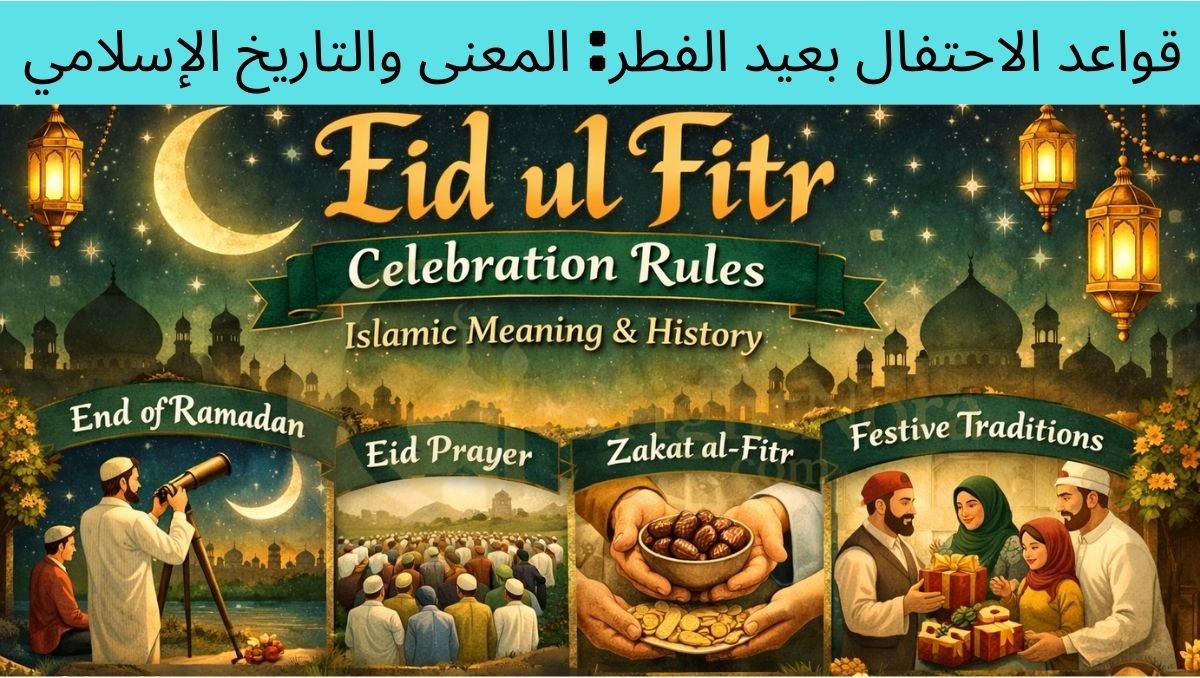
The new crescent moon sighting represents more than a lunar calendar shift for 1.8 billion Muslims because it brings a day of happiness and thanksgiving and spiritual triumph. The Eid ul Fitr Celebration Rules originate from deep dedication which transforms a month of self-control into a period of communal festivities. The Festival of Breaking the Fast serves as a divine blessing from God who rewards faithful worshippers for their dedication during Ramadan.
Visit Now:https://duaguidance.com/
What Is Eid ul Fitr? (Islamic Meaning)
Eid ul Fitr in Islam translates literally to the Festival of breaking the fast. The word Eid signifies a recurring happiness or a festival that returns every year, while Fitr relates to the word Iftar (breaking the fast) or Fitrah (nature).
Spiritually, it represents a state of purity. After spending thirty days in prayer, fasting (Sawm), and charity, Muslims believe they have undergone a spiritual reset. Fasting should not occur on this day because it marks the moment when a servant completes their duties to Allah and receives permission to enjoy His rewards.
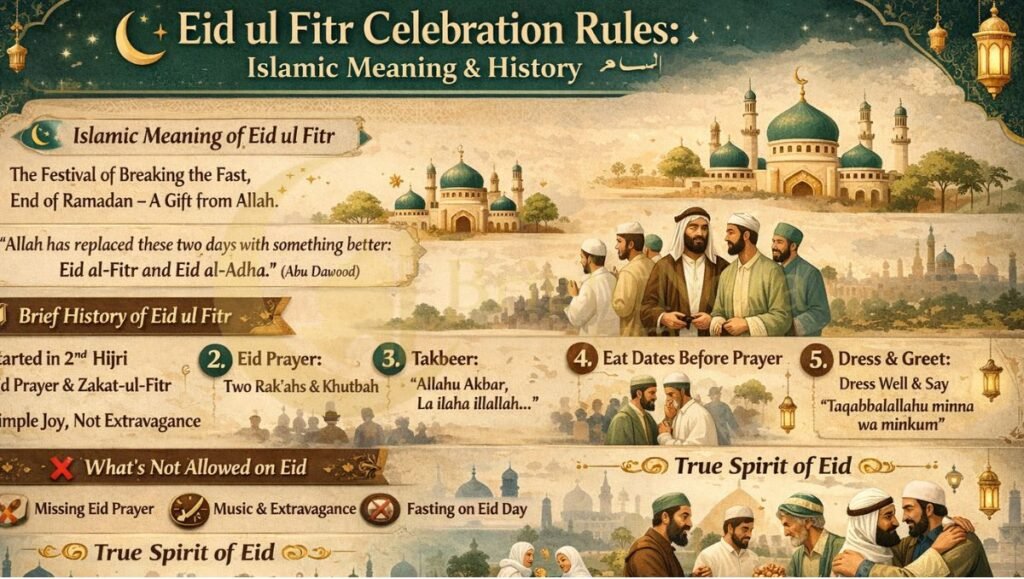
History of Eid ul Fitr in Islam
The origins of Eid date back to the time of Prophet Muhammad (peace be upon him) in Medina. The Prophet (PBUH) discovered that people from Medina were celebrating two special occasions with festive activities according to authentic Hadith.
He asked them about these days, and they replied, We used to celebrate them in the days of Jahiliyyah (pre-Islamic ignorance).
The Prophet (PBUH) then expressed his statement Allah has substituted for you something better than them The day of Al-Adha and the day of Al-Fitr. (Sunan Abi Dawud)
Eid has become a holy period which the Ummah uses to celebrate their happiness according to their religious beliefs since that time.
Also Read: Eid ul Fitr Meaning, History & Islamic Importance Explained
Why Eid ul Fitr Is Celebrated After Ramadan
The observance of Eid following Ramadan serves as a deliberate practice which conveys deep significance to Muslim observers. Ramadan serves as a time for Muslims to undergo spiritual development through intense monthlong training. Eid serves as the graduation ceremony.
The celebration occurs on Shawwal 1 the 10th month of the Islamic calendar to honor the revelation of the Qur’an which Allah provided to help people endure their fasting period. The program delivers an important lesson which demonstrates that actual happiness comes from following God’s commands and completing religious obligations.
Islamic Rules of Eid ul Fitr Celebration
The Islamic regulations of Eid allow us to celebrate our holiday as a religious worship instead of a mere cultural tradition.
1. Mandatory Obligations: Zakat al-Fitr
Every independent Muslim must provide Zakat al-Fitr (Fitrana) before the Eid prayer.
- The specific charity designated for this purpose exists to Purify the fasting person from any indecent act or speech during Ramadan.
- Offer food for those less fortunate so they may join in the jubilating crowd.
- It must be paid before the Eid prayer; if paid after, it is considered ordinary charity (Sadaqah).
2. The Sunnah Acts of Eid
The best way to maximize the blessings of Eid ul Fitr exists through following its Sunnah.
- Ghusl & Dressing Up:The main Sunnahs for this occasion include Ghusl which requires people to perform a ritual bath before heading outside and Dressing Up which requires people to wear their best clothes that should be either new or their cleanest available.
- Eating Before Prayer: According to Sunnah people should eat something sweet which usually consists of dates in odd numbers before leaving for the Eid prayer.
- Takbeerat: People should recite the Takbir aloud while going from their home to the prayer ground.
- Changing Routes: People should use different paths to go to the prayer ground and back home because it helps them spread peace greetings.
3. What is Allowed and Prohibited
- Allowed: People are permitted to enjoy healthy entertainment which includes singing that does not use vulgar words or forbidden musical instruments and they are allowed to eat their meals and spend time with their relatives.
- Prohibited: Fasting on the day of Eid is strictly Haraam (forbidden) according to Islamic law.Likewise, overspending or engaging in activities that contradict Islamic modesty is discouraged.
How Is Eid ul Fitr Celebration Rules in Islam?
The main elements that define Eid ul Fitr celebrations consist of three essential components which include Prayer and Charity and Community.
The Eid Prayer (Salat al-Eid)
The main event of the morning takes place during the congregational prayer. The prayer service usually takes place either in an open field known as a Musalla or inside a spacious mosque. The prayer consists of two units (Rak’ahs) with extra Takbirs. Unlike the Friday prayer, the sermon (Khutbah) follows the prayer, and listening to it is highly recommended.
Family and Community Ties
Eid is a social glue. It is the time to mend broken relationships, visit relatives, and host neighbors. The Eidi custom of giving small gifts and money to children exists in various cultures, which helps create Islamic traditions through which children develop feelings of affection and excitement.
Also Read: Eid al-Fitr Zakat, Fitrana & Charity Rules – Complete Islamic Guide
Common Mistakes During Eid Celebration
The day brings happiness to people, but several typical mistakes lead to the decreased spiritual significance of the occasion.
- Skipping Fajr: Many people who stay up late on Chand Raat, which leads them to sleep through Fajr, need to understand that the Fajr prayer holds greater importance than the Eid prayer.
- Extravagance: People show off their wealth through extravagant spending on clothes and food, which they use to display their wealth, rather than showing appreciation for what they possess.
- Neglecting the Poor: Focusing only on one’s own family while neighbors or the less fortunate go hungry.
- Mixing the Forbidden: People who celebrate Islam, through their use of music and immodest behavior at their parties, together with their violation of Haya principles, which stands for Islamic modesty, test Islamic boundaries through their actions.
The Spiritual Importance of Eid ul Fitr
Eid spiritual essence exists within the Eid Mubarak phrase, which serves as a blessing for the entire day. It is a day of Taqwa (God-consciousness). The believer celebrates because they hope their sins have been forgiven and their deeds accepted. It serves as a reminder that while Ramadan has ended, the Lord of Ramadan is still the Lord of the rest of the year.
Modern Eid Celebrations vs. Islamic Teachings
Eid has become a commercial holiday in our contemporary world, which moves at a fast pace. According to Islamic traditions, we must celebrate with basic things, which Islamic teachings direct us to do. Authentic Islamic Eid ul Fitr Celebration Rules thrive on the human value of greetings exchanged through handshakes and embracing during meals with those who have nothing.
Also Read: Ramadan Fasting Rule – Sehri, Iftar & Important Islamic Tips
Conclusion
Eid ul Fitr represents a complete work of Islamic tradition. It perfectly balances the soul’s need for spiritual discipline with the human need for joy and community. By following the Eid ul Fitr celebration rules, paying our Zakat, and adhering to the Sunnah, we transform a simple holiday into a powerful act of worship.
As the moon marks the end of your fast, let your heart be filled with the Takbeer and your hands be open in charity. May every Eid bring the Ummah closer to the path of the Prophet (PBUH).
FAQ’s
What are the Eid ul Fitr Celebration Rules?
The Eid ul Fitr Celebration Rules include performing the Eid prayer, giving charity (Zakat al-Fitr), visiting family and friends, wearing new or clean clothes, and enjoying festive meals.
How are the Eid ul Fitr Celebration Rules observed during the day?
The Eid ul Fitr Celebration Rules are observed by attending the Eid prayer, exchanging greetings, sharing meals, and giving charity.
When should the Eid ul Fitr Celebration Rules be followed?
The Eid ul Fitr Celebration Rules should be followed on the day of Eid, right after the sighting of the new moon, marking the end of Ramadan.
What are the key aspects of Eid ul Fitr Celebration Rules at home?
Key aspects of Eid ul Fitr Celebration Rules at home include preparing festive meals, decorating the house, wearing clean clothes, and spending quality time with family.
How can families ensure proper Eid ul Fitr Celebration Rules are observed?
Families can ensure the Eid ul Fitr Celebration Rules are followed by planning prayer, charity, visits, and meals in advance, creating a joyful and spiritual celebration.