

As the crescent moon marks the beginning of the holy month, Muslims around the globe prepare for a journey of spiritual reflection, self-discipline, and devotion. While the focus remains on prayer and connection, your physical well-being plays a massive role in how you experience the month.
The pre-dawn meal, known as Suhoor, serves as the main source of energy which sustains you throughout your upcoming fasting period. The healthy Suhoor tips will help you maintain body strength and mental focus while providing steady energy between Fajr and Maghrib.
Visit Now:https://duaguidance.com/
Why Suhoor Is Important in Ramadan
Suhoor exists as both a traditional practice and an essential Sunnah which delivers substantial health advantages. The body experiences fatigue and headaches together with irritability when people skip this meal which results in decreased spiritual concentration.
A well-balanced Suhoor stabilizes blood sugar levels while protecting muscles from breakdown which typically happens during extended fasting periods. The body uses this nutritional foundation to maintain metabolic functions which enables you to complete your daily activities at work, school and home without experiencing fatigue.
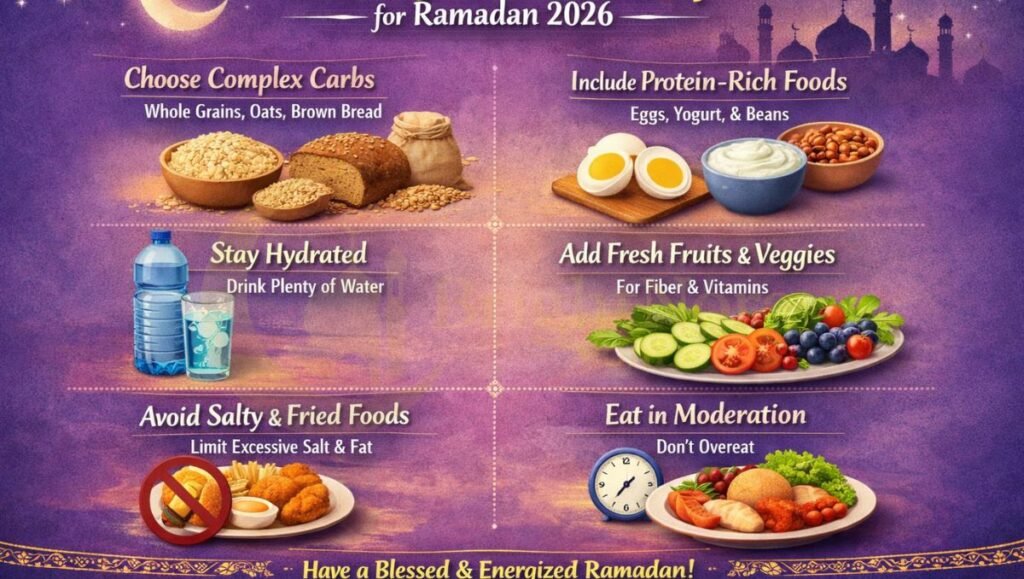
Nutritional Principles for a Healthy Suhoor
The optimal pre-dawn meal requires three main components, which include Complex Carbohydrates, Lean Protein and Healthy Fats.
- Complex Carbohydrates: The body takes time to process complex carbohydrates, which results in a continuous glucose flow to the bloodstream.
- Lean Protein: The consumption of protein extends the duration of feeling full because it activates satiety.
- Fiber: Fiber found in fruits and vegetables functions as a digestive aid while it stops people from experiencing post-meal sluggishness.
Also Read: Ramadan Fasting Intention and Iftar Dua in Arabic with Translation
Best Foods for Healthy Suhoor Tips
When choosing what to put on your plate at 4:00 AM, quality matters more than quantity. Here are the top food groups to include:
1. Whole Grains (Oats, Barley, Quinoa)
Steel-cut oats or whole-wheat bread are excellent choices. They are rich in fiber and keep your energy levels stable throughout the morning.
2. Eggs and Greek Yogurt
Eggs are a powerhouse of high-quality protein. Pair them with Greek yogurt, which contains probiotics that help with gut health during the change in eating patterns.
3. Hydrating Fruits and Vegetables
Watermelon, cucumbers, and oranges are not just snacks—they are “eaten water.” Including these helps keep your cells hydrated long after you’ve finished drinking.
4. Healthy Fats (Avocado, Nuts, Seeds)
Fats slow down the emptying of the stomach. A few walnuts or half an avocado can significantly delay the onset of hunger pangs.
Foods to Avoid at Suhoor
Your body needs to stay hydrated and energized, so you should avoid these everyday foods.
- Salty Foods: Canned foods, pickles, and salty cheeses draw water out of your cells, making you desperately thirsty by noon.
- Simple Sugars: Sugary cereals or pastries cause a rapid insulin spike followed by a crash, which results in fatigue and hunger within two hours. The two problems need solutions that must be solved by two different methods.
- Caffeine: While a cup of tea is tempting, excessive coffee acts as a diuretic, causing your body to lose precious fluids.
Hydration Tips for Long Fasting Hours
Hydration is not about how much you drink during Suhoor, but how you manage fluids throughout the night.
- Sip, Don’t Chug: Drinking two liters of water right before Fajr will only result in a quick trip to the bathroom. Instead, sip water consistently between Iftar and Suhoor.
- Coconut Water: This is a natural electrolyte booster that is more effective than plain water for long-term hydration.
- Limit Salt: As mentioned, reducing sodium intake during Suhoor is the most effective way to prevent thirst during the day.
Sample Healthy Suhoor Meal Plan
If you’re looking for inspiration, here are three balanced options:
| Option | Main Dish | Side | Drink |
| The Power Bowl | Oatmeal with chia seeds and berries | A boiled egg | 2 glasses of water |
| The Traditional | Whole-wheat pita with ful medames (beans) | Cucumber and tomato slices | Hibiscus tea (unsweetened) |
| The Quick Fix | Greek yogurt with honey and almonds | One banana | Coconut water |
Suhoor Tips for Energy & Productivity
To remain productive in Ramadan 2026, timing is everything. Try to eat Suhoor as late as possible closer to the Fajr call to prayer to shorten the window of fasting.
After eating, avoid going back to sleep immediately if possible. A light stretch or 10 minutes of reading can help your digestion settle and keep your brain engaged for the workday ahead.
Weight Management During Ramadan
Many people find they unexpectedly gain weight during Ramadan due to heavy, fried Iftars. To manage your weight, focus on portion control during Suhoor. Avoid fried doughs and heavy oils. Focus on volume-eating through vegetables, which fill you up for very few calories.
Common Suhoor Mistakes to Avoid
- Skipping the Meal: Thinking you’d rather sleep than eat is a recipe for a difficult fast. Even a few dates and water are better than nothing.
- Eating Until You’re Uncomfortable: Overeating leads to indigestion and acid reflux, which can ruin your focus during morning prayers.
- Relying on Processed Meat: Sausages and deli meats are high in sodium and preservatives that zap your energy.
Special Preparation Tips for Ramadan 2026
With Ramadan 2026 falling in late winter/early spring for many, the days may be shorter, but the air can be dry.
Pre-prep your meals: The process of meal preparation requires advance work which includes chopping vegetables and soaking oats for use the next day. The procedure helps you to avoid unhealthy foods because you wake up early and prepare breakfast for your morning meal.
Also Read: Ramadan Night Prayers: Benefits of Tahajjud & Qiyam
Conclusion
The holy month of Ramadan provides people with a chance to cleanse their mental and physical selves. The implementation of these healthy Suhoor tips enables you to achieve more than basic fasting survival because you will experience greater success during your fast.
When your body is nourished correctly, you have more patience, more focus for your prayers, and more energy to spend with your loved ones.
May this Ramadan be a month of health, ease, and spiritual growth for you and your family.
FAQ’s
What are some Healthy Suhoor Tips for Ramadan?
Follow Healthy Suhoor Tips like including complex carbs, protein, fruits, and water to stay energized all day.
Which foods should I eat according to Healthy Suhoor Tips?
Healthy Suhoor Tips recommend oats, eggs, yogurt, whole grains, nuts, and hydrating fruits like watermelon.
How can I stay hydrated following Healthy Suhoor Tips?
Healthy Suhoor Tips emphasize drinking water, avoiding excessive caffeine, and eating hydrating foods like cucumbers.
Can I include sweets in my meal with Healthy Suhoor Tips?
Healthy Suhoor Tips advise limiting sugary foods, as they cause a short energy spike but may lead to fatigue later.
How do I plan a balanced meal using Healthy Suhoor Tips?
Healthy Suhoor Tips suggest combining proteins, healthy fats, slow-digesting carbs, and prepping meals in advance.