

The arrival of the holy month brings a spiritual atmosphere of reflection, gratitude, and community. The upcoming 2026 fasts present a yearly obstacle because we need to maintain our physical strength while we complete our religious duties. Following a structured Ramadan Diet Plan 2026 serves two purposes; it helps with weight control and provides your body with the essential energy required for 14 to 16 hours of fasting without experiencing a midday energy slump. The guide will show you how to balance your meals and maintain proper hydration while selecting foods that deliver consistent energy through all daylight hours.
Visit Now:https://duaguidance.com/
Why Nutrition Matters During Ramadan
Fasting is a profound shift for human metabolism. During the hours of restraint, your body initially uses stored glucose for energy and later moves to burning stored fat. Without a proper Ramadan Diet Plan 2026, this transition can lead to fatigue, headaches, and irritability.
The Impact of Fasting on Your Body
The body enters rest and repair mode when you observe fasting. The body experiences a shock response when you end your fast by consuming heavy or oily or sugary foods which results in digestive problems and excessive tiredness. Your blood sugar levels will stay constant through a balanced diet which stops the dizziness that typically happens during the first days of each month.
The Goal of Balanced Meals
The objective is to achieve a balance between the three macronutrients: proteins, healthy fats, and complex carbohydrates. When you choose to eat foods that have higher nutritional value than their calorie content you will provide your body with required nutrients for your physical needs while maintaining your ability to concentrate on prayer and your daily tasks.
Also Read: Ramadan Second Ashra: Days of Forgiveness & Maghfirat
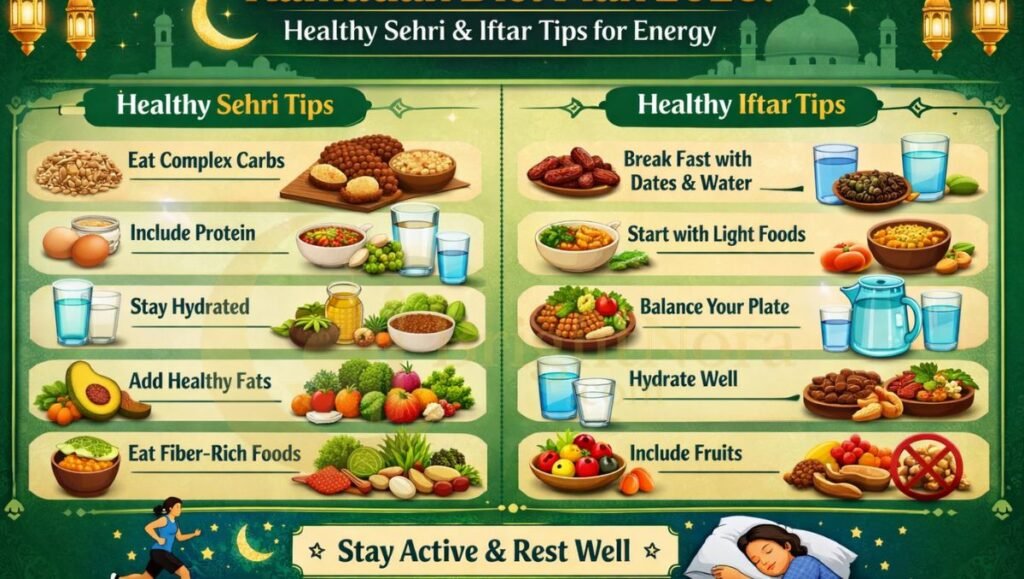
Healthy Sehri Foods for Long-Lasting Energy
Sehri (Suhoor) is arguably the most important meal of the day. It acts as the foundation for your fast. A common mistake is skipping Sehri to get more sleep, but this often leads to exhaustion by noon.
1. Complex Carbohydrates (Slow-Release Energy)
The body needs more time to digest complex carbohydrates than it needs to process refined carbohydrates which include white bread and sugary cereals. The body processes these foods as they transform into energy which the body absorbs into the bloodstream at a gradual rate that continues for several hours.
- Oats and Barley: The two grains contain high fiber content which enables them to provide strong satiety.
- Whole Grain Bread: The bread delivers B vitamins while offering a consistent energy supply.
- Brown Rice or Quinoa: Excellent for those who prefer a heavier morning meal.
2. Protein-Rich Foods
Protein serves a dual purpose because it supports muscle upkeep and helps people feel satisfied. The meal keeps you full for an extended period when compared to a meal that consists only of carbohydrates.
- Eggs: Eggs serve as the ultimate breakfast protein because they establish the highest benchmark for breakfast protein.
- Greek Yogurt: Greek Yogurt delivers two benefits because it provides high protein content and includes probiotics that support gut health.
- Lean Meats: You can add chicken breast or turkey slices from lean meats as filling options for your wraps.
3. Hydrating Fruits and Vegetables
Your hydration starts at Sehri, not just through water, but through the food you eat.
- Watermelon and Oranges: High water content.
- Cucumber and Tomato: Great additions to an omelet or sandwich.
- Bananas: A great source of potassium, which helps prevent muscle cramps during the day.
Foods to Avoid at Sehri
To make your Ramadan Diet Plan 2026 successful, avoid these “thirst-inducers”:
- Excessive Salt: Salty cheeses, pickles, and processed meats will make you feel incredibly thirsty within hours.
- Caffeine: Tea and coffee are diuretics, meaning they flush water out of your body.
- White Flour Pastries: These cause a quick insulin spike followed by a crash, leaving you hungry very quickly.
Best Iftar Foods to Break Your Fast
Iftar is a time of celebration, but it is also the time when most people overindulge. The key is to start slow and rehydrate before moving to solid food.
Sunnah Foods to Start Iftar
Following the prophetic tradition is not only spiritually rewarding but scientifically sound.
- Dates: They provide a quick burst of natural sugar to restore low blood glucose and are packed with fiber.
- Water: Drink room-temperature water in small sips to rehydrate the cells without shocking the stomach.
Balanced Iftar Meal Ideas
After the initial opening of the fast, wait 10–15 minutes before eating a full meal. This allows your brain to register that food is coming.
- Soups: Lentil soup (Dal) or vegetable broth is easy on the stomach and adds to your fluid intake.
- Salads: A fresh greens salad with olive oil dressing provides essential enzymes.
- Grilled Proteins: Instead of deep-frying, try grilled fish, baked chicken, or air-fried kebabs.
Healthy Drinks for Hydration
Avoid the brightly colored, sugary syrups often found at Iftar tables. Instead, try:
- Coconut Water: Naturally high in electrolytes.
- Infused Water: Infused Water consists of water which contains lemon and mint and cucumber slices.
- Homemade Fruit Smoothies: The recipe for Homemade Fruit Smoothies requires natural yogurt as the only ingredient without any added sugar. The recipe for Homemade Fruit Smoothies needs natural yogurt as its sole component which contains no added sugar.
Ramadan Diet Plan 2026: Sample Daily Meal Plan
The Ramadan Diet Plan 2026 sample schedule shows you a complete healthy day which you can use for visualization purposes.
| Meal Time | Food Suggestions |
| Sehri | 1 bowl of overnight oats with chia seeds, 1 banana, and 2 glasses of water. |
| Iftar Start | 2-3 Dates, 1 glass of water, and a small bowl of lentil soup. |
| Main Iftar | Grilled chicken breast, a side of roasted sweet potatoes, and a large green salad. |
| Post-Iftar Snack | A small handful of raw nuts (almonds/walnuts) and a cup of herbal tea. |
Foods That Keep You Energetic During Ramadan
The essential factor behind success is maintaining regular practice. The Ramadan Diet Plan 2026 will enable you to sustain energy throughout the month by including these superfoods into your diet.
- Chia Seeds: These can absorb up to 10 times their weight in water which helps you maintain your internal hydration needs.
- Avocados: The nutritious fats in avocados provide users with sustainable energy throughout their day.
- Lentils and Beans: Lentils and Beans provide human bodies with essential protein and fiber that promotes proper digestive function.
- Nuts and Seeds: Nuts and Seeds provide the perfect solution to deliver instant nutritional energy during the period between Iftar and Sehri.
Foods to Avoid in Ramadan
While it’s tempting to treat every Iftar like a feast, certain foods will actively work against your goals.
- Deep-Fried Snacks: Deep-Fried Snacks Samosas and pakoras taste great but they cause heartburn and indigestion. The air-fryer version of the dish provides a healthier option for those who need to eat it.
- Sugary Carbonated Drinks: Sugary Carbonated Drinks create bloating effects while they provide no nutritional benefits.
- High-Sugar Desserts: Excessive Mithai or pastries lead to lethargy and weight gain. Limit these to once or twice a week in small portions.
Hydration Tips During Ramadan
Dehydration is the biggest cause of headaches and fatigue during the fast. However, drinking two liters of water at Sehri isn’t the answer; your body will simply flush it out.
- The Rule of 8: Aim for 8 glasses of water between Iftar and Sehri.
- 2 at Iftar.
- 4 between Iftar and bedtime (one every hour).
- 2 at Sehri.
- Eat Your Water: Consume water-rich foods like zucchini, bell peppers, and celery.
- Avoid Salt: We cannot stress this enough. High sodium intake is the primary reason for daytime thirst.
Healthy Lifestyle Tips During Ramadan
A successful Ramadan Diet Plan 2026 goes beyond just what you put on your plate; it involves how you manage your body and time.
Light Exercise
Don’t stop moving! While heavy weightlifting or intense cardio might be difficult, a 20-minute brisk walk about an hour before Iftar or two hours after Iftar can keep your metabolism active and improve circulation.
Proper Sleep
Sleep deprivation can change your hunger hormones (ghrelin and leptin) which causes you to develop an increased desire for sugary foods. You should aim to sleep for a minimum of 6-7 hours by taking afternoon naps or by sleeping soon after Taraweeh prayers.
Portion Control
Use smaller plates during Iftar. It’s easy to pile food high when you are hungry, but your stomach has actually shrunk slightly during the day. Eating slowly gives your stomach time to tell your brain it’s full.
Also Read: Ramadan 2026 Daily Guide: Duas, Sehri Tips & Ibadah Schedule
Conclusion
The Ramadan Diet Plan 2026 requires people to show respect for their bodies which serve as their spiritual vessels. The fasting experience improves when you select complex carbohydrates during Sehri and maintain hydration throughout the day and stay away from sugary foods during Iftar. Eid will bring you increased work energy and better prayer concentration and improved physical health.
People should practice moderation as their main objective. The month offers cultural delicacies which you should enjoy but you need to combine them with the nutrients your body needs. May this Ramadan become your most healthful and energetic Ramadan thus far!
FAQ’s
What is the best Ramadan Diet Plan 2026 for healthy fasting?
The Ramadan Diet Plan 2026 includes balanced meals with protein, fiber, healthy fats, and plenty of water during Suhoor and Iftar to maintain energy.
What foods should be eaten at Suhoor in Ramadan Diet Plan 2026?
In the Ramadan Diet Plan 2026, it is recommended to eat slow-digesting foods like oats, eggs, yogurt, whole grains, and fruits to stay full and energized.
How can the Ramadan Diet Plan 2026 help maintain energy while fasting?
The Ramadan Diet Plan 2026 focuses on nutritious Suhoor and Iftar meals, proper hydration, and avoiding fried or sugary foods.
What foods should be avoided in Ramadan Diet Plan 2026?
In the Ramadan Diet Plan 2026, it is best to avoid excessive fried foods, sugary drinks, and processed snacks because they can cause dehydration and low energy.
How much water should you drink in Ramadan Diet Plan 2026?
In the Ramadan Diet Plan 2026, it is recommended to drink 6–8 glasses of water between Iftar and Suhoor to stay hydrated throughout the fasting day.