

Ramadan Dua is the heartbeat of a believer’s worship during the holiest month of the year. It is a time when millions of Muslims around the world turn their faces toward the Qibla, raising their hands in desperate hope, seeking the intervention of the Almighty. But the question often comes up in the minds of people: “I have been praying every day, why are the results not visible to me?”
It is very important to have the correct spiritual understanding of Ramadan Dua to keep one’s faith and perseverance. This month is not only about the physical act of fasting but also about the spiritual act of tuning one’s soul to the Divine Will.
Visit Now:https://thewiseera.com/
The Power and Promise of Supplication in Ramadan
The Prophet Muhammad (PBUH) stated that the fasting person’s breath is more pleasant to Allah than musk, and their supplications are always granted. Every Ramadan Dua made with sincerity has the potential to shift destiny. Yet, we must realize that “unanswered” does not mean ignored. God is the All-Hearing; sometimes, however, His non-response is either a guard or a setting up for something more extraordinary to occur.
Also Read: Powerful Duas – Help, Hope & Blessings
The Condition of the Heart and Rizq
For a Ramadan Dua to reach the heavens, the vessel from which it comes—the human body—must be pure. Scholars often point out that if a person’s wealth is earned through interest, fraud, or oppression, their prayers face a barrier. We will have to ensure our lives are built on the foundation of Halal (lawful) living if we want our prayers to be accepted.
The Etiquette of Asking
Many of us treat prayer like a shopping list. We rush through our words at Iftar, preoccupied with the food in front of us. To truly benefit from a Ramadan Dua, one must follow the Prophetic Sunnah: start by praising Allah, send blessings upon the Prophet (PBUH), admit one’s shortcomings, and then ask with the certainty that Allah is capable of all things.

Comparative Analysis: Factors Affecting Dua Acceptance
The following table highlights the difference between a “Prophetic” approach to prayer and the common mistakes we make that lead to feelings of disappointment.
Acceptance Factors for Ramadan Dua
| Aspect | The Ideal Ramadan Dua | Common Obstacles/Mistakes |
| Intention | Purely for Allah’s pleasure and genuine need. | Seeking worldly gain through haram means. |
| State of Mind | Full Yaqeen (certainty) and focus. | Mind wandering, distracted by hunger or phone. |
| Timing | Utilizing Tahajjud, Iftar, and Laylatul Qadr. | Only praying casually when convenient. |
| Persistence | Repeating the prayer with humility and tears. | Giving up after a few days if results don’t show. |
| Connection | Accompanied by repentance (Istighfar). | Praying while persisting in major sins. |
Why Some Prayers Appear Unanswered
When we talk about Ramadan Dua, we must remember that Allah’s response comes in three distinct forms. Sometimes, He gives us exactly what we want. Other times, He withholds what we want to protect us from a hidden harm we cannot see. Lastly, He may save the reward of that prayer for the Day of Judgment, where it will be more valuable than anything on earth.
If you feel your Ramadan Dua is being delayed, it might be because Allah loves to hear your voice. The more you call upon Him, the closer you get to Him. Sometimes the delay is not a denial, but a way to keep you at His doorstep.
The Role of Patience (Sabr)
Patience is the twin of prayer. In the Quran, Allah says, “Seek help through patience and prayer.” A Ramadan Dua is often a test of this very patience. Are you asking because you believe in Allah, or are you asking because you want to test Him? True believers continue to pray even when the sky seems silent, knowing that Allah’s timing is always perfect.
Clearing the Path for Your Prayers
To ensure that your Ramadan Dua is not blocked, look inward. Are there people you haven’t forgiven? Are you holding onto grudges? The Prophet (PBUH) mentioned that the prayers of those who sever ties with their kin are held back. Ramadan is the month of mercy; if we do not show mercy to Allah’s creation, how can we expect His mercy upon us?
The Importance of Tahajjud
While every moment of this month is blessed, the last third of the night is the most powerful time for a Ramadan Dua. This is when Allah descends to the lowest heaven and asks, “Who is calling upon Me, that I may answer him?” Most of our “unanswered” prayers are simply waiting for us to wake up at this elite time and speak to our Creator in the stillness of the night.
The Psychological Impact of Dua
Beyond the spiritual rewards, a Ramadan Dua provides immense psychological relief. It acts as a form of therapy where the believer offloads their anxieties, fears, and depression onto the All-Powerful. Even the peace of the spirit is, nevertheless, the thing that the believer on the outside finds no change in their situation. This “tranquility of the heart” is often the first sign that your prayer has been accepted.
Also Read: Surah An-Nas – Powerful Insights for Daily Protection
Conclusion
As we reach the final days of this holy month, do not let your energy fade. It is hard to swallow sometimes, but at the end, the greatest Ramadan Dua is the one that is made in the darkest corner of a devoted heart, although the mantra is unpolished and the eyeballs are parched.
Allah does not pay attention to how good you are at expressing yourself, but He only cares for the genuineness of your spirit. Don’t stop asking, don’t stop knocking, and most importantly, don’t stop believing. The “unanswered” prayer of today might be the greatest miracle of your tomorrow.
FAQ’s
What is the most popular dua during Ramadan?
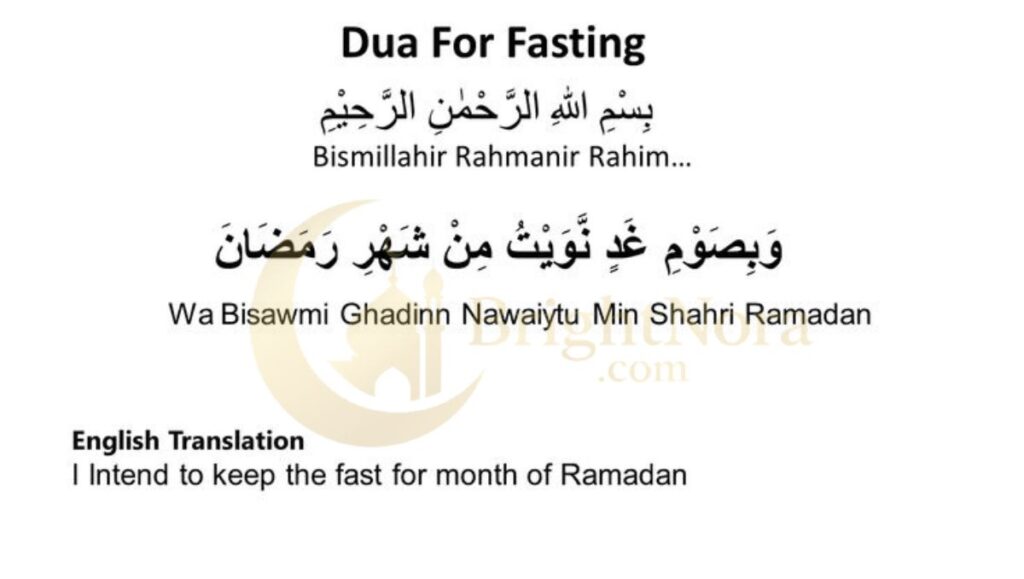
The most popular dua is: “Allahumma inni laka sumtu wa bika aamantu…”, recited at sehri and iftar.
When is the best time to make dua?
Dua can be recited during sehri, iftar, after prayers, and in the last part of the night.
What are the benefits of making dua?
Dua helps in seeking forgiveness, increasing sustenance, and bringing peace to the heart.
Can dua be recited in languages other than Arabic?
Yes, it can be recited in your own language, though reciting in Arabic carries Sunnah and greater reward.
How can one remember duas effectively?
You can remember them by noting them from the Quran and Hadith, practicing daily, or listening to audio recordings.