
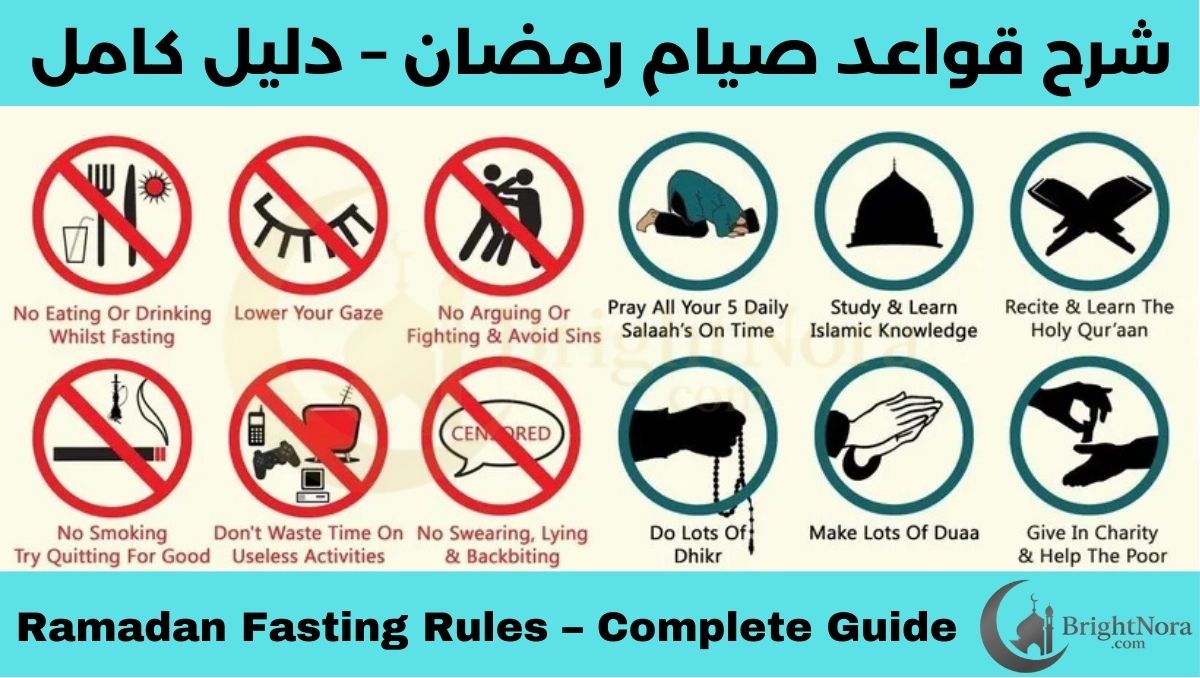
Ramadan fasting rules: Ramadan is a period of extreme spiritual renewal, a month when the soul gets the opportunity to breathe as earthly life is done slowly. For thousands or even millions of people across the globe, it is a time of heavy worship, meditation, and communion. Besides, for those who are not yet used to it or those who want to deepen their understanding, the convolutions sometimes seem to be many and hard to overcome.
To really enjoy this holy period, one must perceive theRamadan fasting rules as a path for personal development rather than a list of restrictions. Thus, this guide tries to present these regulations in such a way that their beauty and kindness can be seen through every demand.
Visit Now:https://thewiseera.com/
The Heart of the Matter: Why We Fast
Prior to the discussion of the restrictions and allowances, it is very important to grasp the reason behind it all. Fasting, or Sawm, is the fourth pillar of Islam. It is designed to cultivate a Taqwa sense of God-consciousness and self-discipline. By following the Ramadan fasting rules, a person learns that they are not a slave to their physical desires. If you can control your hunger and thirst for sixteen hours, you gain the confidence to control your temper, your ego, and your bad habits for the rest of the year. It is a spiritual detox that cleanses the heart as much as it does the body.
The Daily Cycle: From Dawn to Dusk
The physical fast begins at the break of dawn (Fajr) and concludes at sunset (Maghrib). The basic Ramadan fasting rules during these hours demand complete non-consumption of:
- Food and Drink: This comprises even a single drop of water or a piece of chewing gum.
- Intimacy: Marital relations are restricted to the non-fasting hours (after sunset until dawn).
- Smoking: This includes traditional cigarettes as well as modern vapes or e-cigarettes.
It sounds difficult, but the human body is remarkably resilient. The hunger pangs you feel are meant to serve as a reminder of those less fortunate, turning a physical sensation into an act of empathy and charity.
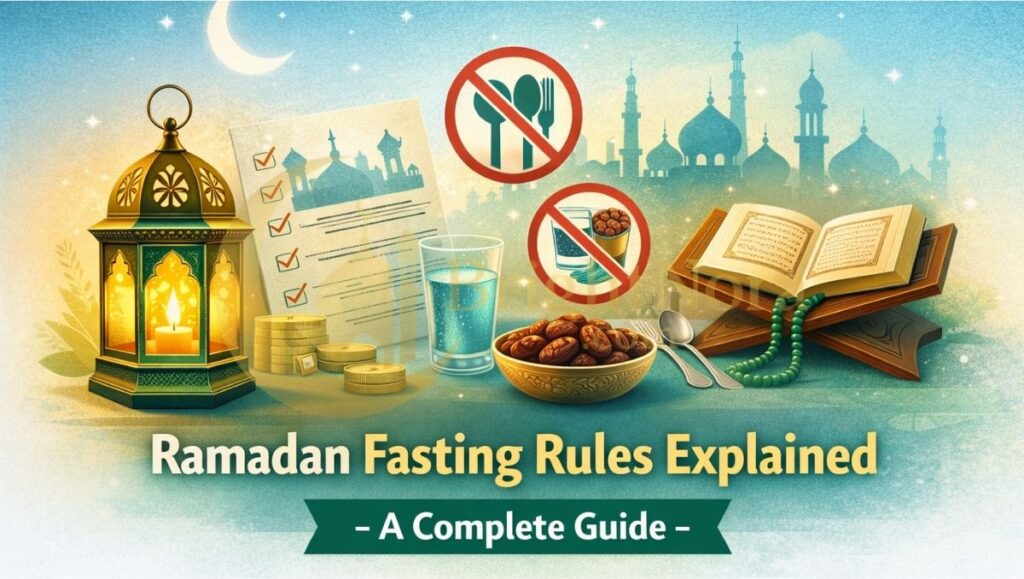
Mercy in the Law: Who is Exempt?
One of the most admirable things about Ramadan fasting rules is the integrated flexibility and mercy. Islam surely does not want fasting to lead to physical damage or extreme hardship. Consequently, some people are allowed not to fast
- Sick and Old: Individuals with long-lasting ailments (such as diabetes) or those whose health would get worse are not allowed to fast.
- People on a Journey: In case you are traveling to a distant and difficult place, you can break your fast and compensate for it later.
- Pregnant and Nursing Mothers: If fasting poses a risk to the mother or the child.
- Women on Period: Women do not fast during their menstruation, but they have to cover the days during the month of Ramadan ending.
This reminds us that the spirit of the law is more important than the letter. God values your health and your intention.
Also Read: Dua for Laylatul Qadr – Most Powerful Night Prayer
Common Misconceptions: What Doesn’t Break the Fast?
There are many myths surrounding what might accidentally ruin your day. As per the conventional rules of Ramadan fasting, the list of actions that will not invalidate the fast is as follows:
- Accidental Eating: In the event that you totally forget about fasting and have a tiny piece of food, just stop at once. Your fasting remains valid!
- Brushing Your Teeth: You are allowed to use both toothpaste and water, but you must be careful not to gulp down any.
- Bathing or Swimming: It is allowed to lower your body temperature, but water must not go down the throat.
- Medical Injections: Most scholars agree that non-nutritional injections (like a flu shot) are allowed.
The Fast of the Senses: Beyond the Stomach
A perfect fast involves more than just an empty stomach. The deeper Ramadan fasting rules apply to your behavior. The Prophet Muhammad (peace be upon him) taught that if a person does not leave behind false speech and evil actions, God does not need them to leave behind their food.
- The Tongue: Do not engage in gossip, tell lies, or argue.
- The Eyes: Avoid looking at things that stir up negativity or lust.
- The Mind: Try to replace stressful or angry thoughts with dhikr (remembrance of God) and gratitude.
Fueling the Soul: Suhoor and Iftar
The two meals that bookend the day are more than just nutrition; they are moments of blessing.
- Suhoor (Pre-dawn): It is highly recommended to eat something before the fast begins. Focus on slow-release carbohydrates like oats or protein-rich foods to keep your energy steady.
- Iftar (Sunset): Breaking the fast should be done promptly. Following the Ramadan fasting rules and traditions, most people start with dates and water. Dates provide a quick boost of natural energy and prepare the stomach for a larger meal.
Staying Healthy and Mindful
Fasting is a marathon, not a sprint. To follow the Ramadan fasting rules successfully while maintaining your daily responsibilities (work, school, family), you must prioritize your health.
- Hydration is crucial: Water intake should be maximized between Iftar and Suhoor times, no matter what. Instead of sugary drinks and coffee, which cause dehydration during the day, consider drinking only water.
- Overeating is a no-no: Iftar is such a fun time to eat and drink after a whole day of fasting, but overdoing it might cause tiredness and even belly pain. Combine your meals with plenty of vegetables and lean proteins.
Making Up for Missed Days
Life can be unpredictable. So if you have to skip a day for health or travel reasons, the Ramadan fasting rules still grant you the chance to make it up.
- Qada: Just making up for the day missed like-for-like later in the year is what this is about.
- Fidya: If an individual had a health condition that was chronic and thus prevented them from ever fasting, they can pay Fidya, which is giving an amount equal to the cost of feeding one person in need for every day of fasting missed.
- Kaffarah: This is a kind of fast punishment for those who break their fast mistakenly without a valid reason (most likely involved is 60 consecutive days’ fasting or feeding 60 poor people).
The Community Connection: Charity and Prayer
Ramadan is a communal event and not a solitary experience. It’s a time when the mosque turns into a home away from home.
- Taraweeh: These nightly prayers are special during the month when the entire Quran gets recited in the course of the month.
- Zakat-al-Fitr: A tiny sum of charity that is given at the end of the month so that even the poor can partake in the Eid festival celebration.
Even if you are struggling with the physical Ramadan fasting rules, participating in these community acts can provide the spiritual boost you need to keep going.
The Final Ten Nights: Seeking the Night of Power
As the month draws to a close, the intensity increases. The last ten nights are the most sacred, containing Laylat al-Qadr (The Night of Power). Many Muslims increase their devotion, staying up late in prayer and reflection. And the fasting regulations during Ramadan have this highest level of spirituality as their end goal, thus during the month, the worshippers would be purified and would have their orientations revitalized.
Also Read: Taraweeh Ki Dua – Ramadan Night Prayer
Conclusion
Moreover, the awareness of the Ramadan fasting rules is the very first step to a fruitful month; however, the enactment of them with sincerity is what really changes a person. It is a month of struggle, yes, but it is a struggle that leads to peace. It is a month of hunger, but one that leads to a truly full soul.
FAQ’s
What are the Ramadan Fasting Rules?
Learn the essential Ramadan fasting rules, including who must fast, the timing, and how to observe it correctly.
Who is exempt from fasting during Ramadan?
Not everyone is required to fast; children, the sick, travelers, and women during menstruation may be exempt.
What is the intention (niyyah) for fasting?
Every fast requires a sincere intention before dawn to make it valid according to Islamic teachings.
How can I follow Ramadan Fasting Rules properly?
Follow the Ramadan fasting rules by observing Suhoor, Iftar, avoiding forbidden actions, and maintaining patience and prayer.
What are the spiritual benefits of fasting in Ramadan?
Fasting increases piety, self-discipline, empathy for the needy, and draws one closer to Allah.