

What Breaks the Fast in Islam: Muslims experience their most intense spiritual renewal during the Ramadan month. The act of fasting which Muslims call Sawm works as a religious practice that helps believers develop Taqwa which means awareness of God. The legal requirements of fasting must be understood because they determine if our worship will be accepted by God. A believer who understands the specific Islamic rules about fasting breaks can observe the holy month with assurance and inner calm.
Fasting serves as one of the Five Pillars of Islam which functions as a sacred practice that cleanses the spirit and teaches us to rely on Allah (SWT) for everything. The Qur’an and the Sunnah of the Prophet Muhammad (peace be upon him) provide clear guidelines for fasting which Muslims practice as their main spiritual duty.
Visit Now:https://duaguidance.com/
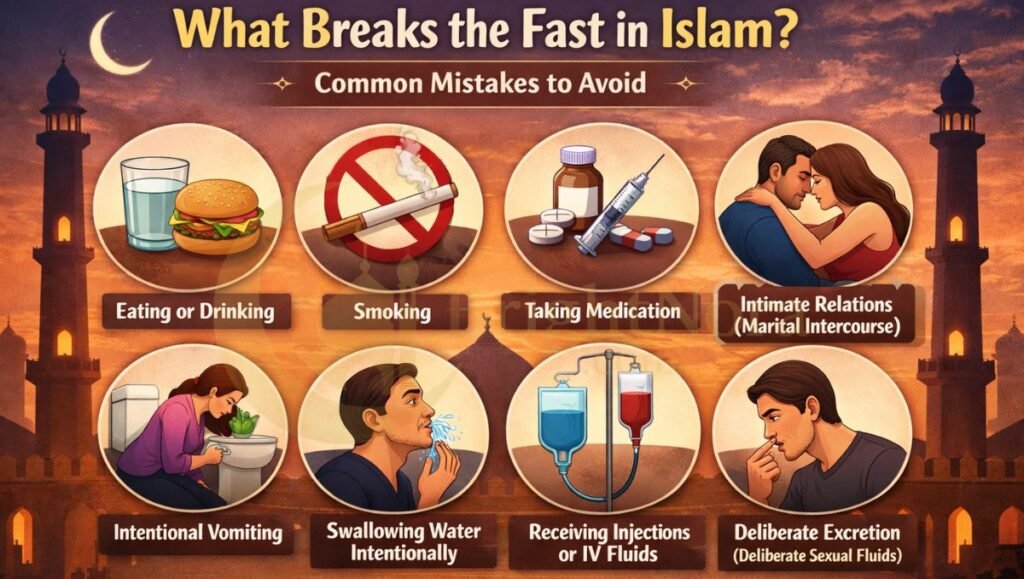
Actions That Definitely Break the Fast
Understanding the physical boundaries is the first step toward a successful Ramadan. To maintain the integrity of your worship, you must avoid the following actions from dawn (Fajr) until sunset (Maghrib).
1. Eating and Drinking Intentionally
The most fundamental rule is the avoidance of nourishment. This includes anything that enters the body through the mouth or nose and reaches the stomach. Whether it is a full meal or a small sip of water, doing so deliberately will nullify the fast.
2. Sexual Intercourse
You should not engage in sexual relations with your spouse because it violates your fasting period. The act of breaking the fast makes the person responsible for Kaffarah which requires him to either fast for sixty days or feed sixty needy people who cannot fast.
3. Intentional Vomiting
The fast remains valid for a person who vomits because of natural illness. The fast becomes invalid when a person makes himself throw up. The Prophet (PBUH) said: Whoever is overcome by vomiting does not have to make up the fast but whoever vomits intentionally must make up the fast (Sunan Abi Dawud).
4. Menstruation and Post-Natal Bleeding
Women must stop fasting because their menstrual cycle starts or their post-natal bleeding begins through Nifas anytime before Maghrib. The days that need to be observed must be completed after Ramadan ends.
5. Deliberate Ingestion of Non-Nutritive Substances
The act of swallowing non-edible items like pebbles or string still breaks the fast because it results in physical objects entering the body.
Also Read: Ramadan for Youth: Staying Focused on Faith
Actions That Do Not Break the Fast
There are several common misconceptions regarding what breaks the fast in Islam. Many Muslims experience anxiety about minor matters which do not affect their Sawm practice.
- Forgetfulness: Your fasting period remains active until today because you forgot your fasting rule after consuming food and drinks without intent to break it. The Prophet Muhammad PBUH declared this to be an Allah-given present.
- Using a Miswak or Toothbrush: Maintaining oral hygiene is permissible. The use of toothpaste is permitted for practice but scholars warn that users must avoid ingesting any toothpaste product.
- Applying Perfume or Attar: The application of perfume or attar does not violate fasting rules because people can still smell pleasant scents.
- Bathing or bathing: People who stay in cold showers use this method to control the temperature of their body so that they can maintain their fast by actually not drinking water from the shower.
- Medical Injections: The fast remains unbroken by medical injections because routine injections including insulin and vaccines do not serve nutritional purposes.
Common Mistakes Muslims Make While Fasting
What Breaks the Fast in Islam: Even with the best intentions, it is easy to fall into habits that diminish the reward of the fast or risk breaking it altogether.
One frequent error is being overly aggressive when rinsing the nose or mouth during Wudu (ablution). The Prophet (PBUH) specifically prohibited the practice of nose inhalation during fasting because it violates his Sunnah method of cleaning the senses. People who practice continuous fasting without Suhoor (the pre-dawn meal) make a fundamental mistake about fasting.
The Prophet (PBUH) taught that people who skip this meal because they want to sleep should understand that Suhoor brings them blessings. Fasting requires Suhoor because its absence causes extreme weakness which leads to early fast termination. People who fast concentrate entirely on their physical hunger while they ignore the fast of the tongue. People who backbite and lie and argue with others do not break their physical fast but they lose all spiritual benefits from their fast.
Intentional vs. Unintentional Actions: The Rule of Mercy
Islam is a religion of ease and intention. The distinction between an intentional act and an accidental one is crucial when determining what breaks the fast in Islam.
If an action occurs by accident such as water entering the throat while swimming or dust flying into the mouth the fast remains perfectly valid. Allah (SWT) does not hold a believer accountable for what is beyond their control.
And there is no blame upon you for that in which you have erred but [only for] what your hearts intended. (Quran 33:5)
However, if a person is aware of the fast and chooses to consume something, they must make up that day (Qada). If the violation involved marital relations, the heavier penalty of Kaffarah applies.
Also Read: Ramadan Preparation Guide: Mind, Body & Soul
Conclusion
Muslim fasting rules require more than a complete list of permitted and forbidden activities. The purpose of this practice exists to safeguard the sacredness of Ramadan while we execute our religious duties. Our true purpose during Ramadan exists as we seek spiritual growth through our efforts to prevent deliberate misconduct and maintain awareness of our actions.
Your fasting practice serves as a test for you to show your dedication to worship, which Allah will reward with approval. The fast becomes your obligation when you forget because you should continue fasting while feeling thankful for your material blessings. Your physical training during this month will create an opportunity for you to experience a deeper relationship with your Creator.
Our fasting and prayer and good deeds please Allah, who gives us the knowledge to observe this month in the best possible way.
FAQ’s
What breaks the fast in Islam during Ramadan fasting hours?
Eating, drinking, intentional vomiting, and marital relations during fasting hours are actions that explain what breaks the fast in Islam.
Does eating or drinking by mistake count as what breaks the fast in Islam?
No, eating or drinking forgetfully does not count as what breaks the fast in Islam, and the fast remains valid.
Do injections or medicines come under what breaks the fast in Islam?
Non-nutritive injections usually do not fall under what breaks the fast in Islam, while nutritional drips may break it.
Does brushing teeth or using miswak fall under what breaks the fast in Islam?
Brushing teeth or using miswak is not included in what breaks the fast in Islam as long as nothing is swallowed.
What should a person do if they commit what breaks the fast in Islam intentionally?
If someone intentionally commits what breaks the fast in Islam, they must repent sincerely and make up the fast later.